 ZM3DPowder
Search the whole station
Search the whole station
High-purity Cobalt Chromium Alloy Powder (cobalt-chromium alloy powder) is specially designed for SLM/DMLS additive manufacturing. It has excellent biocompatibility and mechanical strength. It is designed to provide precise forming guarantee for medical implants and dental restoration and can be purchased in bulk.
15-53μm
Particle size
≥ 95%
Sphericity
F75
Complies with ASTM


the gas atomization process is adopted, and the measurement time of Hall flow meter is ≤ 20s/50g, which ensures the uniform and smooth powder spreading process and effectively reduces the pore defects between printing layers.
The oxygen content is controlled below 200ppm to prevent oxidation inclusions during laser melting, and significantly improve the fatigue life and anti-fracture toughness of implants.
the sphericity is more than 95%, the splash and slag hanging in the printing process are reduced, and the dimensional accuracy of the complex dental bracket is controlled within ± 0.05mm.
strictly follow the ISO 5832-4 standard, does not contain nickel, beryllium and other allergenic elements, fully meet the long-term implantation of the human body toxicological safety requirements.
with the optimized laser scanning strategy, the relative density of the formed parts can reach more than 99.9%, ensuring that the load-bearing parts such as artificial joints have extremely high hardness and wear resistance.
the particle size distribution is a narrow range normal distribution (D10 ≥ 18 μm, D90 ≤ 50 μm), which minimizes the roughness of the fine structure and reduces the post-polishing man-hours.
| Chemical elements/physical properties | Standard value (Wt.%) / index | Physical performance items | Performance parameters |
| Cobalt (Co) | Balance | Apparent Density | 4.5 – 5.0 g/cm³ |
| Chromium (Cr) | 27.0 – 30.0% | Tap density | 5.5 – 6.2 g/cm³ |
| Molybdenum (Mo) | 5.0 – 7.0% | Melting point | 1380 – 1450 ℃ |
| Silicon (Si) | ≤ 1.0% | Tensile strength | ≥ 1100 MPa |
| Manganese (Mn) | ≤ 1.0% | Yield strength | ≥ 600 MPa |
| Iron (Fe) | ≤ 0.75% | Elongation | ≥ 10% |
| Oxygen (O) | ≤ 0.02% | Hardness | 35 – 45 HRC |
This product is produced by vacuum induction melting gas atomization (VIGA) technology. Compared with ordinary centrifugal atomization powder, its particle size consistency is higher, and the laser absorption rate can be significantly improved. In the production of dental crowns and bridges, the stability of this microstructure reduces the deformation after heat treatment by 40%, which greatly ensures the closeness of clinical bonding.


In view of the common problem of excessive interlayer stress in SLM process, the risk of cracking of large-size implants is reduced by optimizing the proportion of alloy components and reducing the coefficient of thermal expansion.
aiming at the pain point of high surface roughness of traditional casting parts, the original surface of Ra<10μm is realized by using extremely fine powder distribution, and the grinding and polishing cycle time is shortened by more than 30%.
to solve the problem that the slender snap ring of the dental active bracket is easy to break during the printing process, and the high yield strength ensures that the structure still has sufficient elastic support force in the extremely fine size.

It is suitable for large-scale production of metal porcelain crowns, crown bridges and movable brackets. It is necessary to ensure that the powder has good thermal expansion matching with various porcelain powders to reduce the risk of porcelain collapse.

For product development of customized artificial joints, spinal interbody fusion devices, etc., high-performance powders conforming to ASTM F75 specifications are required to pass preclinical biomechanical verification.

suitable for the development of porous callus structure or gradient functional materials, the use of powder good fluidity for accurate microporous structure printing experiments.

Although the main medical, but because of the alloy has excellent high temperature strength, also suitable for working temperature below 600 ℃, wear resistance requirements of small aviation components development.

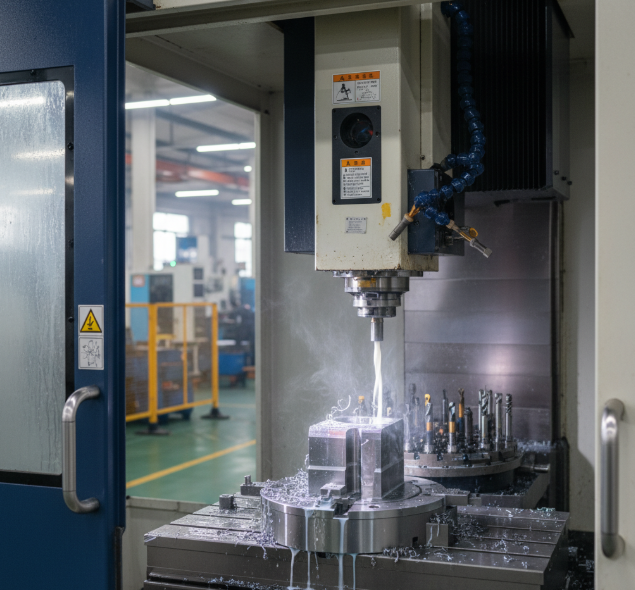
Our factory
A1: Support. Under strict inert gas protection and screening process, the powder can be recycled more than 10 times, and the chemical composition and fluidity have no obvious attenuation.
A2: Yes. Vacuum stress relief annealing (about 1150 ℃) is usually required to eliminate the internal stress generated by laser processing and improve the ductility of the material.
A3: Very wide compatibility. Its particle size distribution (15-53μm) is suitable for powder spreading systems of mainstream metal 3D printers such as EOS, Renishaw and Concept Laser.
A4: This product strictly control the nickel content (Ni < 0.1%), in line with the medical industry “no nickel cobalt chromium alloy” standard, to prevent patients from allergic reactions.
A5: Should be stored in a cool, dry, ventilated environment, use the original vacuum sealed packaging, avoid contact with moisture to prevent oxidation.
A6: The printed hardness is usually 32-38 HRC. After heat treatment and cold work hardening, the maximum can reach about 45 HRC, which is very wear-resistant.
High-purity Cobalt Chromium Alloy Powder (cobalt-chromium alloy powder) is specially designed for SLM/DMLS additive manufacturing. It has excellent biocompatibility and mechanical strength. It is designed to provide precise forming guarantee for medical implants and dental restoration and can be purchased in bulk.
Particle size
15-53μm
Sphericity
≥ 95%
Complies with ASTM
F75

Phosphorus-free, chlorine-free and formaldehyde-free formula to avoid killing the key beneficial bacteria that decompose waste in septic tanks. By maintaining the ecological balance of microorganisms, the frequency of septic tank suction maintenance can be reduced by about 20%, and the service life of the system can be extended.
Unlike traditional laundry powders containing clay or plastic fillers, the present laundry tablets do not contain any insoluble residues. It can be completely converted to liquid state in water within 15 seconds, which can eliminate the blockage caused by the accumulation of solid deposits in pipes and filters from the source.
The active substance content is ≥ 60%, which is 3-5 times that of ordinary liquid detergent. The weight of a single piece is only 3g, which can clean 5kg of clothes. While ensuring strong removal of oil stains and protein dirt, it greatly reduces the total amount of chemicals discharged into the septic tank.
Optimized for HE (high efficiency) and septic systems. The low-foam formula can prevent the foam layer from being too thick to interfere with the solid settlement process in the septic tank, ensure the effective separation of solids, liquids and scum in the wastewater, and improve the treatment efficiency of the system.
Active protease and amylase are added to simulate the decomposition process in nature, and the initial decomposition of organic dirt is started in the washing stage. These ingredients into the septic tank can assist bacteria to degrade waste, to achieve “washing is pretreatment”.
Compared to bulky liquid detergents, this product is 90% smaller and 95% lighter. For distributors, a single logistics load can be increased by more than 10 times, significantly reducing storage space costs and end-of-line distribution costs.
| Parameter Dimensions | Technical indicators | Industry/International Standards Reference |
| Product Form | Ultra-thin sheets | industry standards |
| Main ingredients | Surfactants (SDS/coconut oil derivatives), proteases, water, glycerol | EU Ecolabel/EPA Standard |
| Solubility | Completely dissolves in water at temperatures between 5°C and 90°C within 15 seconds. | ASTM D5245 |
| Chemical composition restrictions | 0% phosphate, 0% chlorine, 0% optical brightener | Septic-Safe Certification Criteria |
| Active ingredient content | ≥ 60% (Ultra-concentrated) | GB/T 13171 |
| Packaging material | 100% Plastic-Free/Biodegradable Cardboard Box | FSC Certification |
| Size/weight per piece | 11cm x 14cm / 3.0g ± 0.2g | mainstream market specifications |
| Shelf life | 36 months (in dry conditions) | industry standards |
This product is produced by vacuum induction melting gas atomization (VIGA) technology. Compared with ordinary centrifugal atomization powder, its particle size consistency is higher, and the laser absorption rate can be significantly improved. In the production of dental crowns and bridges, the stability of this microstructure reduces the deformation after heat treatment by 40%, which greatly ensures the closeness of clinical bonding.
In view of the common problem of excessive interlayer stress in SLM process, the risk of cracking of large-size implants is reduced by optimizing the proportion of alloy components and reducing the coefficient of thermal expansion.
aiming at the pain point of high surface roughness of traditional casting parts, the original surface of Ra<10μm is realized by using extremely fine powder distribution, and the grinding and polishing cycle time is shortened by more than 30%.
to solve the problem that the slender snap ring of the dental active bracket is easy to break during the printing process, and the high yield strength ensures that the structure still has sufficient elastic support force in the extremely fine size.
It is suitable for large-scale production of metal porcelain crowns, crown bridges and movable brackets. It is necessary to ensure that the powder has good thermal expansion matching with various porcelain powders to reduce the risk of porcelain collapse.
For product development of customized artificial joints, spinal interbody fusion devices, etc., high-performance powders conforming to ASTM F75 specifications are required to pass preclinical biomechanical verification.
suitable for the development of porous callus structure or gradient functional materials, the use of powder good fluidity for accurate microporous structure printing experiments.
Although the main medical, but because of the alloy has excellent high temperature strength, also suitable for working temperature below 600 ℃, wear resistance requirements of small aviation components development.
A1: Support. Under strict inert gas protection and screening process, the powder can be recycled more than 10 times, and the chemical composition and fluidity have no obvious attenuation.
A2: Yes. Vacuum stress relief annealing (about 1150 ℃) is usually required to eliminate the internal stress generated by laser processing and improve the ductility of the material.
A3: Very wide compatibility. Its particle size distribution (15-53μm) is suitable for powder spreading systems of mainstream metal 3D printers such as EOS, Renishaw and Concept Laser.
A4: This product strictly control the nickel content (Ni < 0.1%), in line with the medical industry “no nickel cobalt chromium alloy” standard, to prevent patients from allergic reactions.
A5: Should be stored in a cool, dry, ventilated environment, use the original vacuum sealed packaging, avoid contact with moisture to prevent oxidation.
A6: The printed hardness is usually 32-38 HRC. After heat treatment and cold work hardening, the maximum can reach about 45 HRC, which is very wear-resistant.


